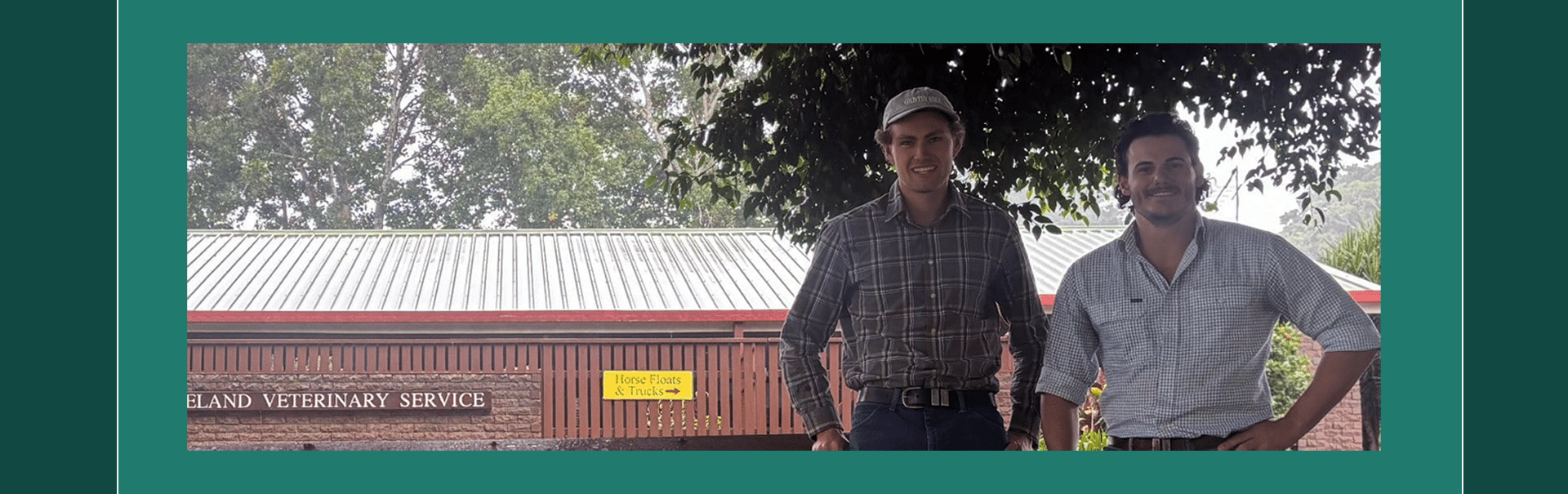
For Elliot Gray, the path to regional veterinary practice began long before arrivng in Glen Innes in the Northern New England region of NSW. Originally from the Sunshine Coast, he studied veterinary science at James Cook University in Townsville, choosing it over a move to Sydney for a variety of practical and lifestyle reasons.
“JCU is known for its hands-on, practical experience,” he said. The northern lifestyle suited him too. A keen fisher and camper, Elliot valued being somewhere he could keep a boat rather than live in a city apartment, and the lower cost of living compared to a move to Sydney sealed the decision. “I didn’t know anyone moving up there initially,” he said, “but being in vet, it’s one of those degrees where you attend uni a fair bit, so I was able to make friends quite quickly.”
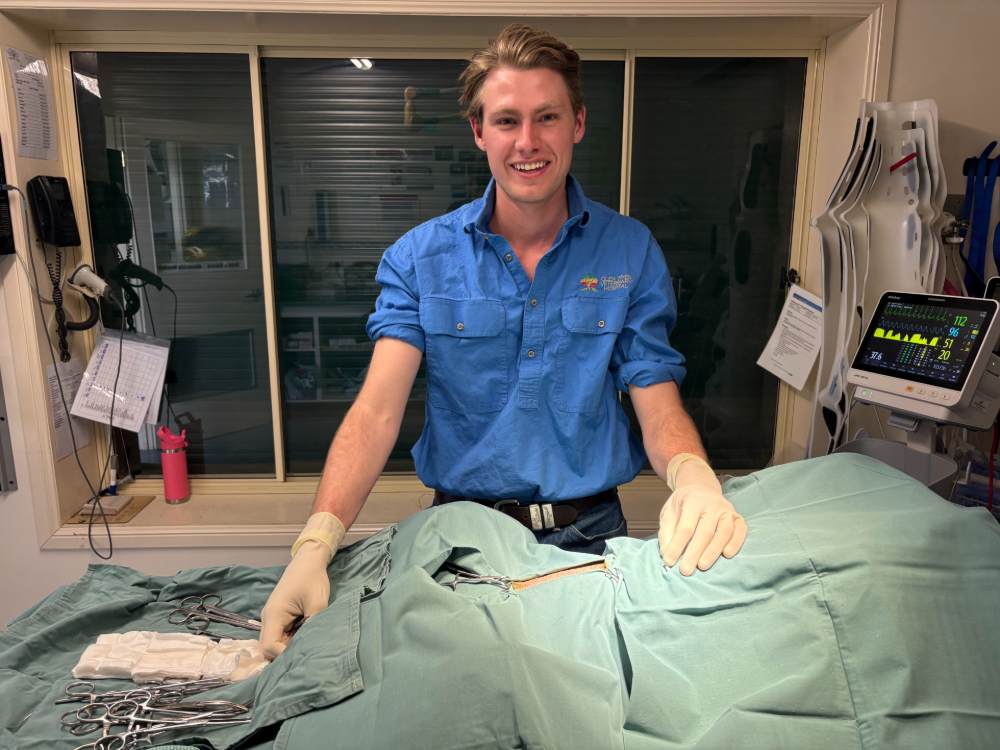 His appetite for hands-on work shaped his first job search. Rather than a clinic weighted heavily towards small animals, Elliot wanted a genuine mixed practice. The Glen Innes role offered a 50-50 split, plenty of cattle, horses, and production medicine, after hours work, and a clinic large enough to be well equipped and well staffed with experienced vets to learn from.
“I was sort of looking around the New South Wales and Queensland area, and this job came up,” he said. The location had a personal pull as well. His partner finished her medical degree last year and is now interning on the Sunshine Coast, around six hours’ drive away. After the 15 hour trip from Townsville, that felt close.
The professional rewards of regional practice came quickly, and sometimes immediately. “I was on-call on my second night of work,” Elliot said. He now works one in three or one in four weekends, and credits rural practice with accelerating his development. With referral options further away, country vets handle far more themselves.
“You get exposed to a lot more cases, and people aren’t as willing to go for a referral because it’s not just around the corner,” he said. “You definitely learn quicker. It’s quite a steep learning curve.” For an early career vet keen to build confidence and capability fast, that exposure is exactly what he’s after.
Settling in socially to a new town can be harder – Elliot noticed that people his own age were often at a different life stage, with partners and children
This is where The Welcome Experience comes in. A free NSW Government service, it supports essential workers and their families who are considering, or have already accepted, a job in regional NSW. Importantly for the profession, veterinary services are among the eligible industries.
The program pairs newcomers with a Local Connector who helps with the practical side of relocating, everything from finding housing and childcare to exploring job opportunities for partners and simply introducing people to their new community. The aim is to help essential workers feel at home sooner, so they are more likely to stay.
Elliot was signed up by his employer. “My boss, Matt, had been involved in it before, so he put me in contact with them,” he said. A second new graduate at the clinic was enrolled too. He received a welcome phone call to see how he was
His appetite for hands-on work shaped his first job search. Rather than a clinic weighted heavily towards small animals, Elliot wanted a genuine mixed practice. The Glen Innes role offered a 50-50 split, plenty of cattle, horses, and production medicine, after hours work, and a clinic large enough to be well equipped and well staffed with experienced vets to learn from.
“I was sort of looking around the New South Wales and Queensland area, and this job came up,” he said. The location had a personal pull as well. His partner finished her medical degree last year and is now interning on the Sunshine Coast, around six hours’ drive away. After the 15 hour trip from Townsville, that felt close.
The professional rewards of regional practice came quickly, and sometimes immediately. “I was on-call on my second night of work,” Elliot said. He now works one in three or one in four weekends, and credits rural practice with accelerating his development. With referral options further away, country vets handle far more themselves.
“You get exposed to a lot more cases, and people aren’t as willing to go for a referral because it’s not just around the corner,” he said. “You definitely learn quicker. It’s quite a steep learning curve.” For an early career vet keen to build confidence and capability fast, that exposure is exactly what he’s after.
Settling in socially to a new town can be harder – Elliot noticed that people his own age were often at a different life stage, with partners and children
This is where The Welcome Experience comes in. A free NSW Government service, it supports essential workers and their families who are considering, or have already accepted, a job in regional NSW. Importantly for the profession, veterinary services are among the eligible industries.
The program pairs newcomers with a Local Connector who helps with the practical side of relocating, everything from finding housing and childcare to exploring job opportunities for partners and simply introducing people to their new community. The aim is to help essential workers feel at home sooner, so they are more likely to stay.
Elliot was signed up by his employer. “My boss, Matt, had been involved in it before, so he put me in contact with them,” he said. A second new graduate at the clinic was enrolled too. He received a welcome phone call to see how he was  settling in, followed by regular emails and texts, and an invitation to a drinks and nibbles evening for newcomers in the area.
For rural clinics, the value of The Welcome Experience program is obvious. As Elliot observed, many regional practices cycle through new graduates who gain a couple of years of experience and then move on, often because they haven’t developed a bond with the town. A program helping early career vets build a life, and not just a caseload, in their new community is a great benefit to a practice wanting to retain staff.
Elliot plans to stay in Glen Innes for at least two years, and he has no regrets about choosing the regions. He has thrown himself into community life in Glen Innes, training with the local rugby team and also getting to know people through work.
For veterinarians weighing up a similar move, his experience is a reminder that the professional growth on offer is significant, and that support is available to help with everything else.
The Welcome Experience has just expanded to cover 89 local government areas across regional NSW. Veterinary professionals moving to, or thinking about moving to regional NSW can register their interest in The Welcome Experience at nsw.gov.au. The service is free, and a Local Connector will be in touch to help with making their move to regional NSW a great experience.
settling in, followed by regular emails and texts, and an invitation to a drinks and nibbles evening for newcomers in the area.
For rural clinics, the value of The Welcome Experience program is obvious. As Elliot observed, many regional practices cycle through new graduates who gain a couple of years of experience and then move on, often because they haven’t developed a bond with the town. A program helping early career vets build a life, and not just a caseload, in their new community is a great benefit to a practice wanting to retain staff.
Elliot plans to stay in Glen Innes for at least two years, and he has no regrets about choosing the regions. He has thrown himself into community life in Glen Innes, training with the local rugby team and also getting to know people through work.
For veterinarians weighing up a similar move, his experience is a reminder that the professional growth on offer is significant, and that support is available to help with everything else.
The Welcome Experience has just expanded to cover 89 local government areas across regional NSW. Veterinary professionals moving to, or thinking about moving to regional NSW can register their interest in The Welcome Experience at nsw.gov.au. The service is free, and a Local Connector will be in touch to help with making their move to regional NSW a great experience.
Elliot Gray
settling in, followed by regular emails and texts, and an invitation to a drinks and nibbles evening for newcomers in the area.
For rural clinics, the value of The Welcome Experience program is obvious. As Elliot observed, many regional practices cycle through new graduates who gain a couple of years of experience and then move on, often because they haven’t developed a bond with the town. A program helping early career vets build a life, and not just a caseload, in their new community is a great benefit to a practice wanting to retain staff.
Elliot plans to stay in Glen Innes for at least two years, and he has no regrets about choosing the regions. He has thrown himself into community life in Glen Innes, training with the local rugby team and also getting to know people through work.
For veterinarians weighing up a similar move, his experience is a reminder that the professional growth on offer is significant, and that support is available to help with everything else.
The Welcome Experience has just expanded to cover 89 local government areas across regional NSW. Veterinary professionals moving to, or thinking about moving to regional NSW can register their interest in The Welcome Experience at nsw.gov.au. The service is free, and a Local Connector will be in touch to help with making their move to regional NSW a great experience.