Successful recovery following orthopaedic surgery extends beyond the procedure itself. While clinicians focus on wound healing, analgesia and rehabilitation, behavioural factors also play an important role in patient outcomes.
Dogs recovering from orthopaedic procedures often require strict activity restriction, which can be challenging for both patients and owners. Confinement-related stress may result in pacing, vocalisation, restlessness, escape attempts and excessive activity, potentially compromising recovery.¹ Behavioural support should begin before surgery to promote positive associations with confinement and, alongside analgesia, crate training and owner education, reduce fear, anxiety and stress while supporting calm behaviour and rest.
How trazodone supports the patients’ recovery
Trazodone is used in veterinary medicine for its anxiolytic and calming effects, supporting improved confinement tolerance and calmer behaviour during recovery. Future permitted use may include peri-operative administration, which has been associated with reduced propofol requirements during induction, fewer vomiting events following morphine premedication, and reduced need for rescue analgesia boluses.2,3
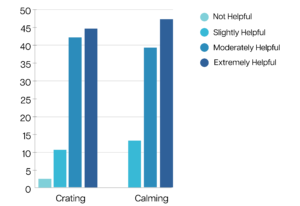
Figure 1. Trazodone supports improved tolerance of post-operative confinement¹
How Australian studies strengthen the evidence behind Trazocalm®
Australian studies conducted by InVetro have evaluated the efficacy and safety of Trazocalm®. Dogs receiving Trazocalm® demonstrated improved handling, compliance, positioning and reduced reactivity, measured using Grint Score assessments, from doses as low as 5 mg/kg. 4 These findings support calmer patient management during examinations and recovery.
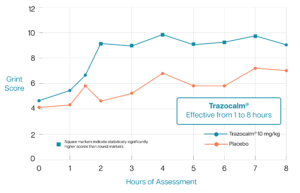
Figure 2. Improvements in handling following administration of Trazocalm® 4
Further studies demonstrated a rapid onset of effect, with reduced activity observed for up to eight hours. Clinicians should consider repeat daily dosing as recommended on the Trazocalm® label to support patients during the confinement period after orthopaedic surgery when they need to remain calm. A lower starting dose is recommended, and this can be increased and administered up to 3 times daily if required with dosing for a period of 4-12 weeks after the patient has been evaluated beyond each 4-week period.
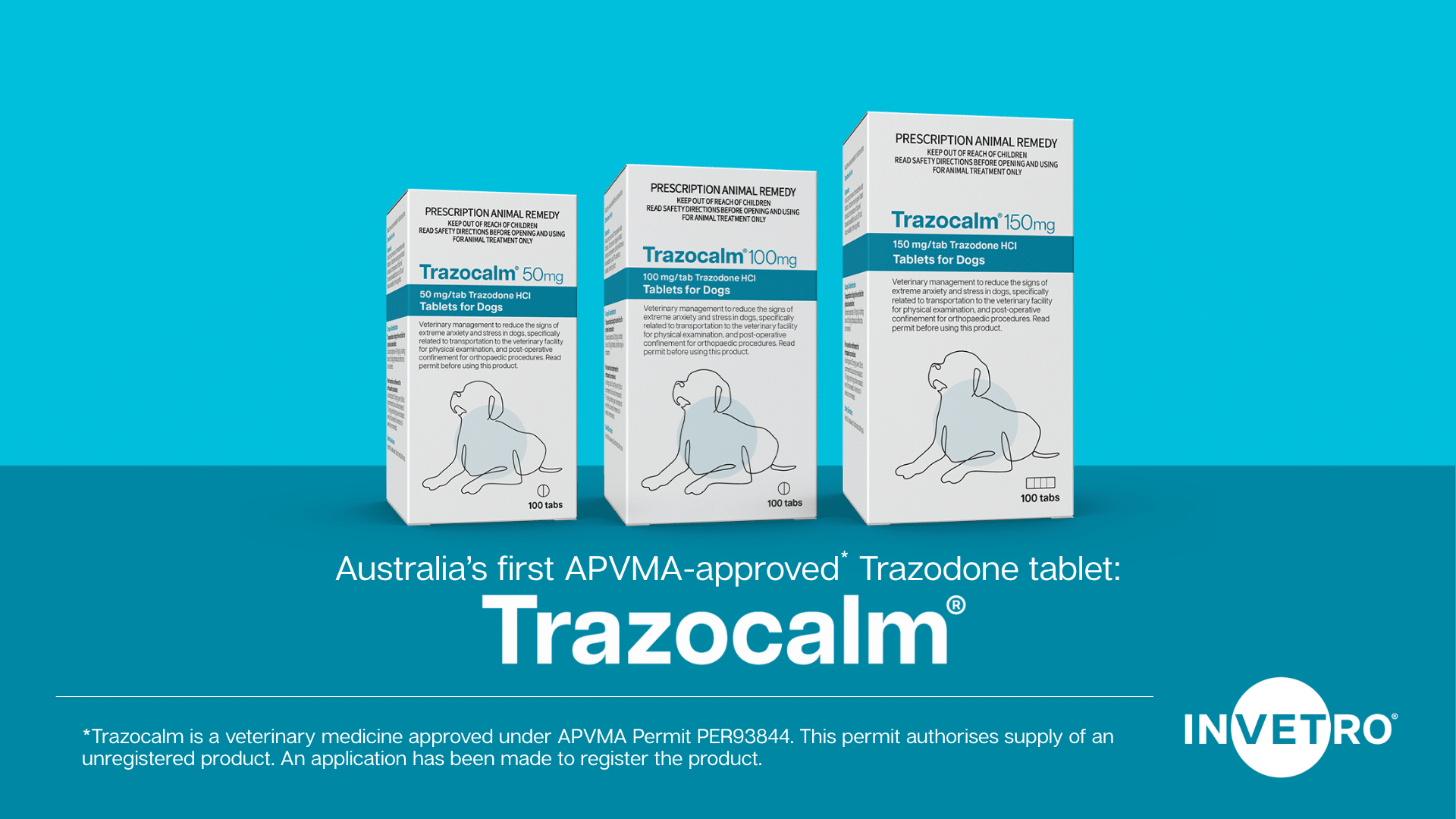
Veterinarians in Australia now have access to Trazocalm®, the first APVMA-approved* veterinary trazodone product. Trazocalm® demonstrated a favourable safety profile, including no adverse events when administered alongside commonly prescribed medications.4
Behavioural support is becoming an increasingly important component of rehabilitation. Addressing both physical and behavioural needs can support patient comfort, owner compliance and successful recovery.
References
*Trazocalm® is a veterinary medicine approved under APVMA PER93844. This permit authorises supply of an unregistered product. An application has been made to register the product.
1Gruen ME, Roe SC, Griffith E, et al. Use of trazodone to facilitate postsurgical confinement in dogs. J Am Vet Med Assoc. 2014;245(3):296–301.
2Pennington E, Springer C, Albright J, Castel A. Evaluation of different methods of environmental enrichment to control anxiety in dogs undergoing hemilaminectomy after acute intervertebral disc extrusion: a randomised double-blinded study. Front Vet Sci. 2023;10:1124982.
3Cambeiro-Camarero N, Fernández-Martín S, González-Cantalapiedra A. Evaluation of oral trazodone as a strategy to reduce anaesthetic requirements in bitches undergoing ovariectomy. Animals. 2025;15:854.
4InVetro. Data on file.