Case examples and quality assurance priorities prepared for discussion by the BULLCHECK Program Subcommittee
Two bulls have recently been brought to the attention of the BULLCHECK Program Subcommittee. Both received a Physical examination Tick approximately 12 months before the current photographs, which now show substantial hoof abnormalities.
The photographs cannot establish precisely how either bull presented at certification, and abnormalities may progress. However, the reviewing veterinarians consider that sufficient early change would likely have been present to warrant a Q. The cases are presented to improve consistency, not to attribute fault.
BULLCHECK grading
Grade | Risk classification |
Tick | Low risk |
Qualified or Q | Some risk |
Fail or F | High risk |
Where findings indicate some risk, or genuine uncertainty remains, the appropriate grading is Q rather than Tick.
Case example 1
A bull was purchased at sale with a BULLCHECK certificate approximately 12 months before this photograph was supplied by another cattle veterinarian.
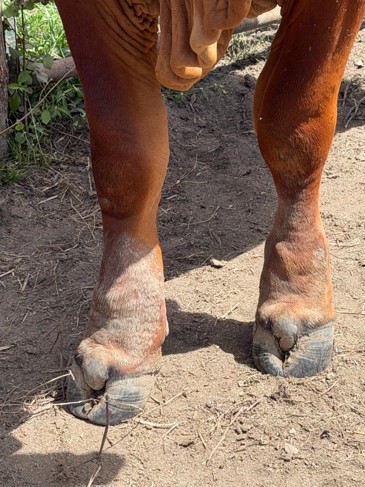
Massive interdigital fibroma visible approximately 12 months after certification
Current observations
The dominant lesion is a massive interdigital fibroma, with marked separation and displacement of the claws. The photograph cannot establish how advanced the lesion was at the original examination. However, given its current size and the associated distortion, the reviewing opinion is that earlier changes would likely have been detectable and warranted a Q rather than a Tick.
Case example 2
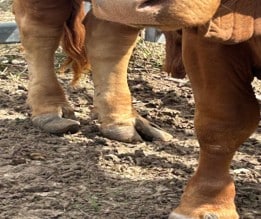
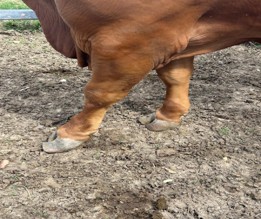
These photographs show the front and hind feet of a three-year-old Droughtmaster bull purchased at a national sale in Rockhampton approximately 12 months earlier. The bull had been issued a BULLCHECK certificate.
View 1 |
View 2 |
View 3 |
View 4 |
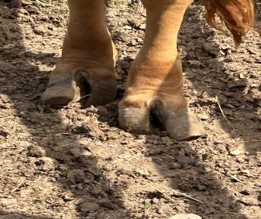
Current observations
The photographs show pronounced overgrowth, deviation and distortion affecting multiple claws. It cannot be established whether abnormalities were missed or trimming influenced their appearance at certification. Even allowing for progression, the reviewing opinion is that the earlier findings would likely have supported a Q rather than a Tick.
Why this matters
Concern is emerging that some bulls which may not meet the expected standard are receiving a Physical examination Tick. Breed societies often mandate BULLCHECK for sales, so confidence depends on consistent grading and effective oversight. The physical examination component of the exam is just as important as the semen examination, as no matter how good the semen is if the bull can’t get around the animals to serve, he is not going to get cows in calf.
Strengthening quality assurance
The forthcoming BULLCHECK App will give ACV central access to certificates and a practical basis for proportionate auditing.
The app will support ACV to
- review certificate data for consistency.
- identify grading patterns or concerns for targeted review, feedback and education; and
- respond to reported cases with an auditable certificate record.
Sale observations
ACV is also considering discreet observation at selected breed sales. Experienced members would compare a sample of bulls with their BULLCHECK certificates. This would not interfere with the sale; its sole purpose would be quality assurance.
Recommended position
Audit is not intended to be punitive. It will support accredited veterinarians, improve consistency and demonstrate to breed societies, vendors and purchasers that concerns are identified and addressed. This is essential to preserving confidence in BULLCHECK and its mandated status at many sales.