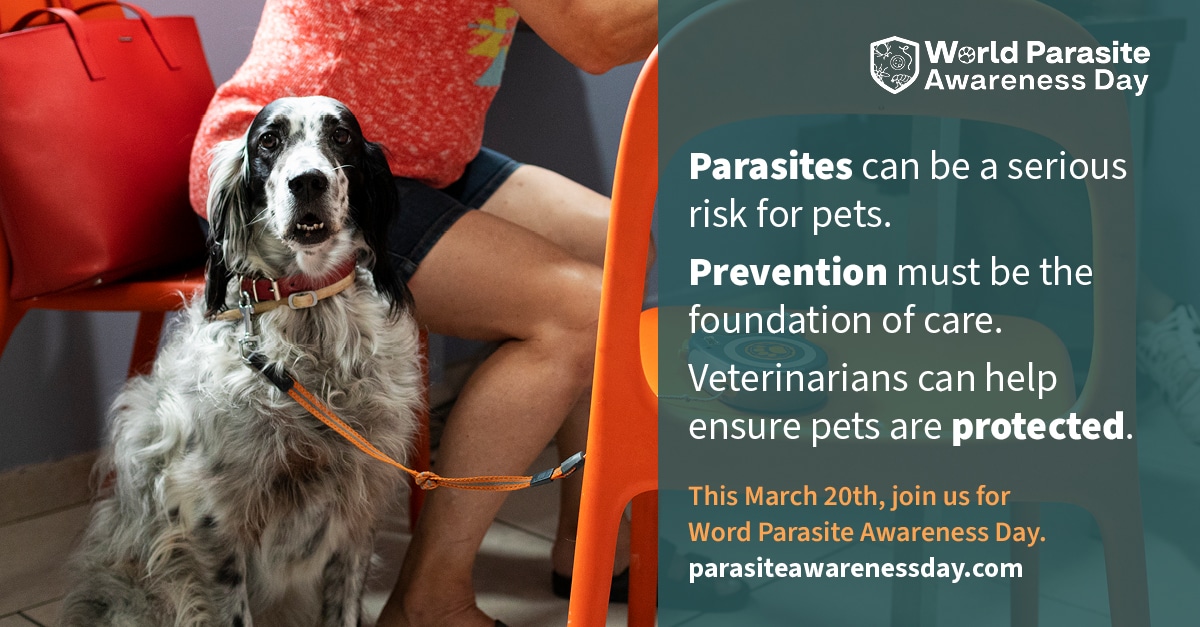
Did you know that World Parasite Awareness Day is held on March 20 each year? It is the first day of spring in the Northern Hemisphere, which is when parasite risk begins to rise for animals in many areas.
Irrespective of hemisphere, it’s an opportunity to shine a spotlight on the ongoing impact of parasites on animal health, public health and veterinary practice. As a profession grounded in prevention, veterinarians play a critical role in addressing this persistent and evolving challenge – and in leading the conversations that underpin effective parasite control.
People may not think much about parasites until their animal/animals are affected. But fleas, ticks, lice and worms are far more common than many of us realise, and they can cause real harm to our animals. In Australia, pets can become seriously unwell or even die if bitten by a paralysis tick.
Parasitic disease also remains a significant production and welfare challenge, with conditions such as haemonchosis in sheep and infections with small strongyles (cyathostomins) in horses continuing to impact health outcomes, underscoring the importance of strategic, evidence-based parasite control programs.
For the inaugural World Parasite Awareness Day last year, the AVA featured leading Australian veterinary parasitology specialist Dr Nick Sangster. With our warming climate and the way parasites are adapting to the changing environment around them, he noted that many parasites are increasing their geographic range, which leaves more animals vulnerable.
For the veterinary profession, the day is an opportunity to reinforce the value of preventative care in everyday practice. Veterinarians are uniquely positioned to assess individual risk, taking into account factors such as geography, lifestyle and species, and to implement tailored parasite monitoring and control strategies. Evidence consistently shows that proactive, veterinarian-led prevention reduces disease burden, limits transmission and improves overall health outcomes.