Every year on 8 November, Human-Animal Bond Day celebrates and promotes the special bond between humans and animals. This day highlights not just companionship but how meaningful these relationships can be for emotional health, social connection, and community wellbeing.
Few understand this better than Dr Alicia (Lissi) Kennedy, founder of Cherished Pets, which delivers veterinary and social services to all pets and people in the community. Her mission began with a clear vision of compassion and care.
“My original intention when I started Cherished Pets was to create a veterinary service to support pets of elderly people as I could see in practice the unique challenges they face in keeping their pets healthy, well and together with them through life’s phases,” Dr Kennedy said.
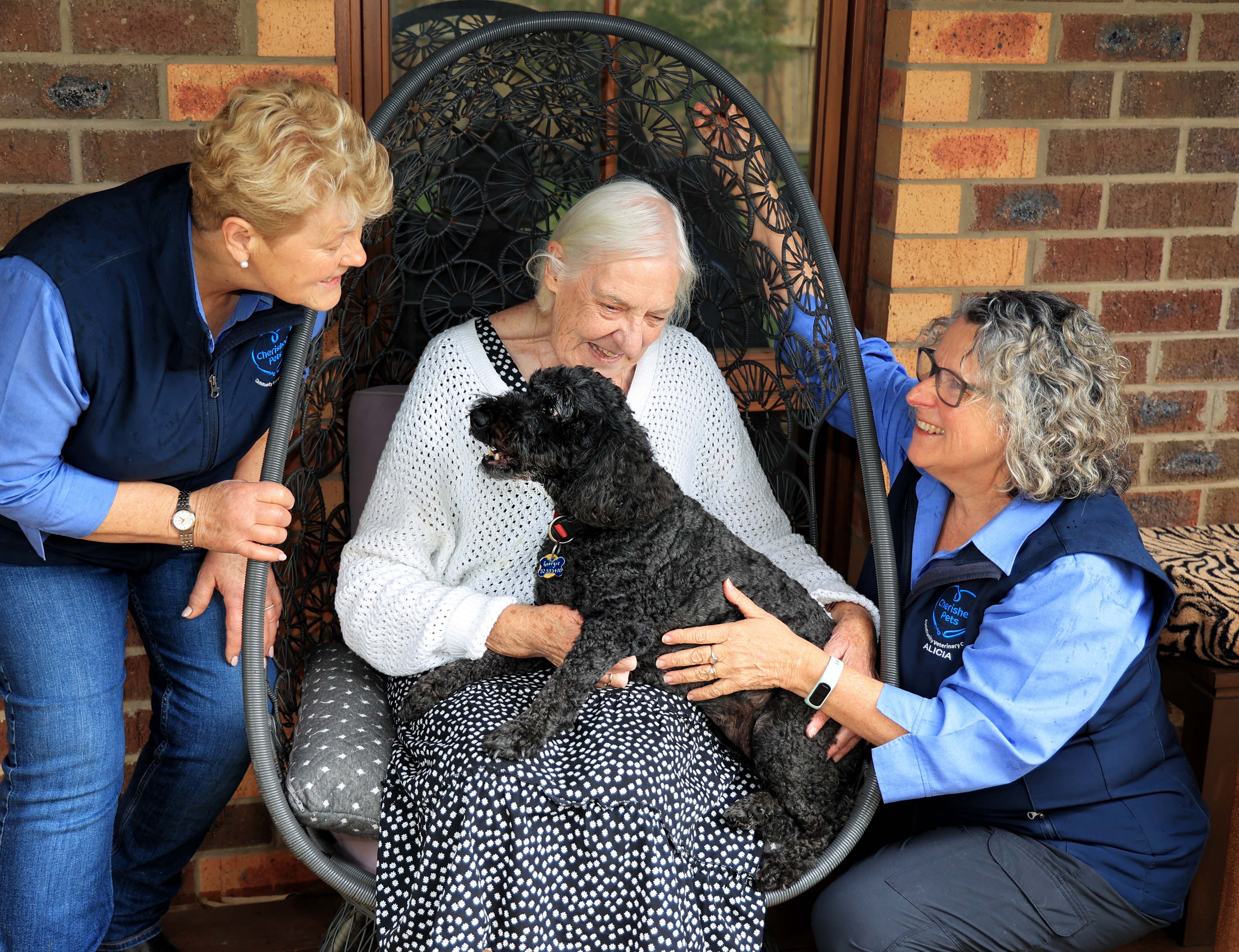
L-R: Community Vet Nurse, Home Care Assistance beneficiary and Dr Alicia Kennedy
That spirit of connection and community resilience lies at the heart of Human-Animal Bond Day.
“The human–animal bond is a powerful catalyst for social connection and healing.”
“For vulnerable populations, such as those experiencing isolation, homelessness, disability, or trauma, companion animals provide unconditional love, stability, and purpose,” Dr Kennedy said.
“This bond fosters empathy, belonging, and emotional wellbeing, while also strengthening community ties when supported through inclusive, accessible pet care. By recognising and nurturing these relationships, we can create more compassionate, connected, and resilient communities.”
Building on a decade of experience, Dr Kennedy recently established the HABCare model – a tangible framework that puts the human–animal bond (HAB) into practice across disciplines.
“We believe in a multidisciplinary approach and have designed our HABCare team with three roles: HABCare Practitioner – Social Worker; HABCare Practitioner – Community Vet Nurse; HABCare Practitioner – Program Support + our volunteers. The HAB has two elements – an animal and a human. Veterinary teams are trained and skilled to manage animal health, but often struggle to respond to the human elements showing up in clinics.
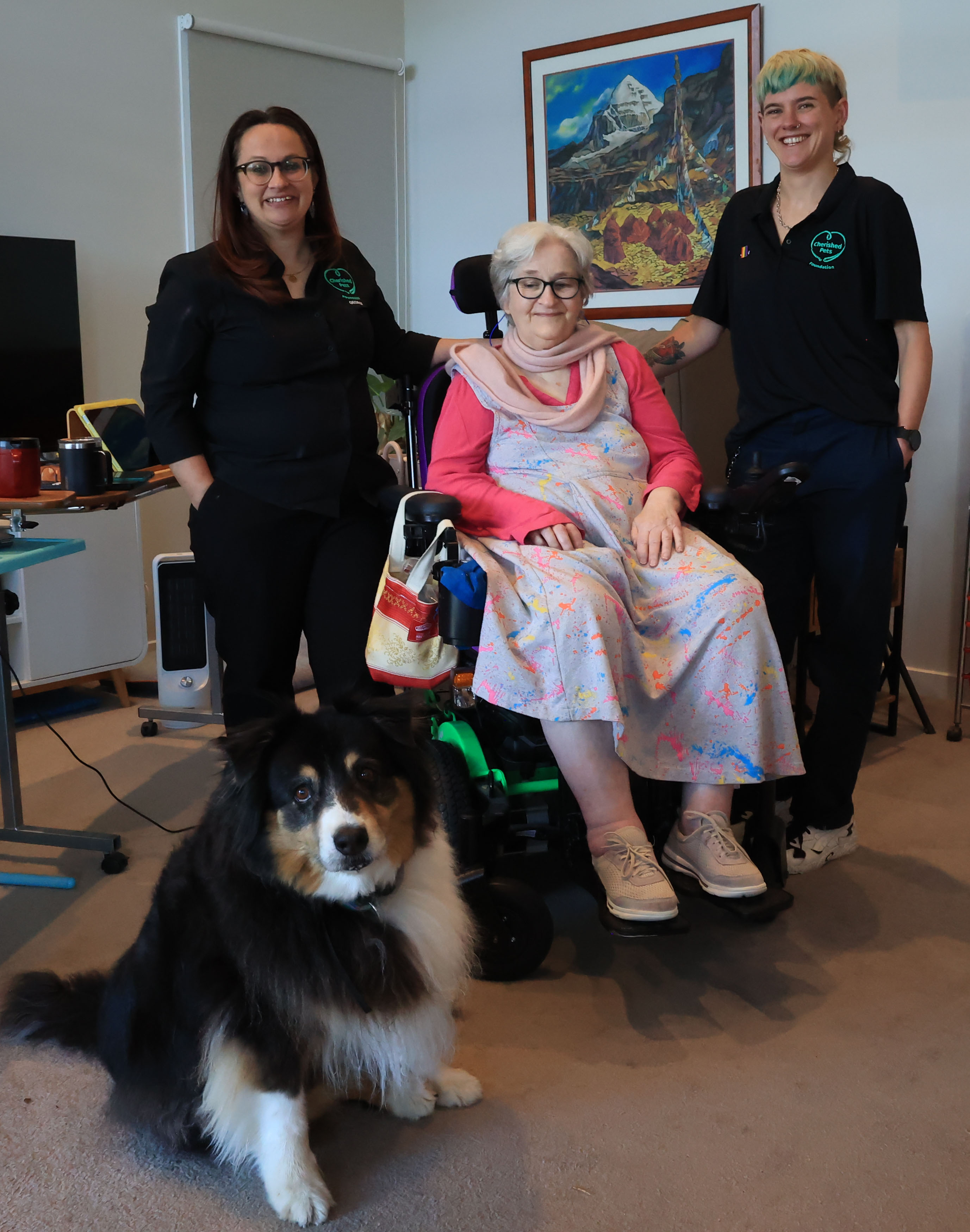
HABCare Social Worker, Community Vet Nurse, beneficiary
“Being able to refer people experiencing complexity to qualified, professional human health professionals and social workers, we provide a resource and referral pathway to our vet teams, so that they can continue to do what they do best – which is look after the animal – and allow the social worker to navigate systems and support the human, whatever the needs are assessed to be. This in turn reduces the emotional load and moral stress being experienced by the vet team.”
This integrative approach highlights the growing recognition that human health, animal welfare, and community wellbeing are inseparable parts of a shared ecosystem.
73% of Australian household now have one or more pets, making animals an integral part of a healthy society, according to the latest Pets in Australia Report by Animal Medicines Australia. The report also found that 86% of pet owners say their pet has a positive impact on their physical and mental wellbeing.
Yet, Dr Kennedy admits the HAB is often overlooked and taken for granted in human health services.
“Vet teams, by supporting the HAB, are contributing to a stronger society, and need recognition and support for the vital role we play.
“The HAB is a powerful driver of human health and wellbeing. We know that social issues deeply impact animal welfare. When people struggle, animals suffer.”
Her hope – that through a multidisciplinary lens we will be able to support pets and their people and the vet teams who support them.
“I have no doubt that 10 or 20 years from now, social veterinary services will be embedded in the community ecosystem bridging veterinary and social services.”