Scientific journals may not receive gold-rimmed birthday letters from royalty, however 100 years as Australia’s leading veterinary journal is certainly worthy of recognition.
This year, the Australian Veterinary Journal (AVJ) is celebrating 100 years of publication – a significant milestone for a journal dedicated to Australian veterinary research. Alongside this achievement, the AVJ is also celebrating one year under the leadership of Emeritus Professor Cathy McGowan as Editor in Chief.

Former AVJ Editors-in-Chief Dr Anne Jackson and Assoc Prof David Beggs with current Editor-in-Chief Emeritus Prof Cathy McGowan AVA Conference 2024
A flagship publication for Australian veterinarians
Since the first issue in 1925, the AVJ has been a flagship of the Association and one of its most valued membership benefits.
For Professor McGowan, making sure Australian vets have access to relevant, important and practical knowledge – from cutting edge research to practical guidelines and case reports – is at the heart of her vision.
“This is the only journal in the world that publishes specifically for the Australian veterinary profession,” McGowan explains.
Growth in scholarly impact
In 2024, the AVJ achieved its highest Impact Factor in history, reaching 1.7, an increase from 1.3 in 2023. The journal’s ranking within the Veterinary Sciences category also climbed significantly, from 78 out of 167 (Q3) to 58 out of 170 (Q2).
“We’ve increased our scholarly impact, which includes our CiteScore, Impact Factor and text views. The other thing we’ve done is we’ve dramatically reduced our review article processing time.”
This faster turnaround means veterinarians and researchers can access knowledge more quickly and rely on the journal for the most up-to-date information.
And importantly, many articles are open access through the Council of Australasian University Librarians (CAUL) agreement with the publishers, Wiley, with no processing fees. For authors and readers, this makes the AVJ accessible and impactful.
One year at the helm

The AVJ editor is pivotal to the journal’s success and requires an understanding of the evolving needs of the veterinary profession, the scientific community and broader veterinary industry.
Reflecting on her first year in the role, Professor McGowan describes it as deeply rewarding:
“For me, personally, after a long career as a senior researcher focused predominantly on equine medicine, endocrinology and laminitis, I’m delighted to now be involved across the profession in all areas. From small animals to our amazing Australian wildlife, and our unique biosecurity challenges,” she said.
“Veterinarians are essential to keeping Australia’s animals safe. Whether in private practice, government, or research, each veterinarian plays a vital role.”
She also acknowledged her predecessor, Associate Professor David Beggs, who helped drive the journal’s rising reputation: “David was instrumental in initiating the improvements in Impact Factor and citation. I’m also fortunate to be supported by an excellent editorial board, which makes this role such a pleasure.”
Special Issues and Collections
The AVJ recently published the comprehensive Antimicrobial Prescribing Guidelines for Horses in Australia, complementing those already available for pigs, poultry, sheep, dairy cattle, and feedlot cattle.
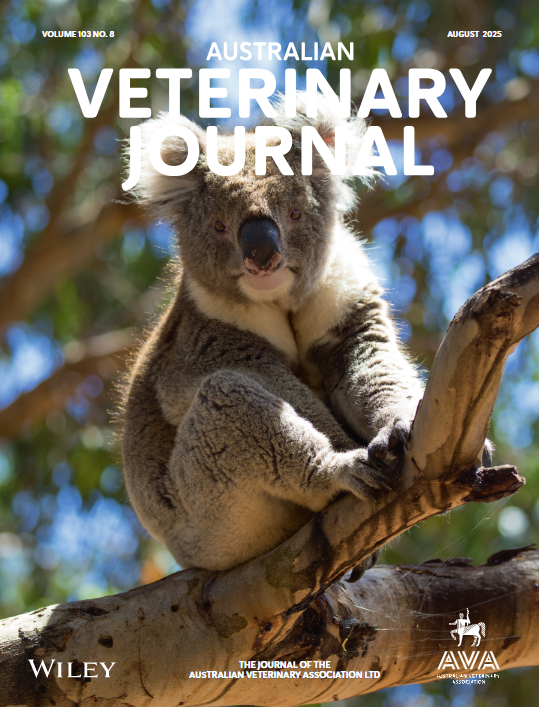
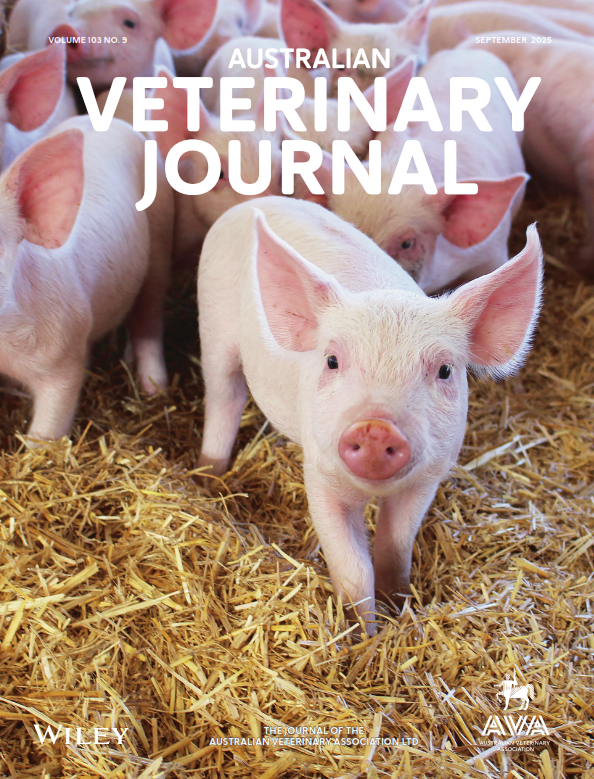
The AVJ also publishes collections and special issues. The August 2025 issue was dedicated to marsupials, focusing particularly on koalas and the bushfire response. The September 2025 issue addressed biosecurity in Australian production animal industries.
Why Publish with AVJ
The AVJ’s growing reputation and impact make it an attractive destination for researchers.
“Authors are encouraged to contact the editor, either indirectly with their cover note or directly via email, especially if their article is part of credentialing for fellowship or other further qualifications.
“The review processing time has been tightened up, and this will give all researchers peace of mind that the AVJ will not only be high impact, but will be able to publish their work in a timely manner.”
With its strong reputation, open access options, and continued focus on Australian veterinary practice, the AVJ remains a journal designed for the profession it serves. Under Cathy McGowan’s leadership, it has strengthened its role as a trusted and vital source of veterinary knowledge in Australia.