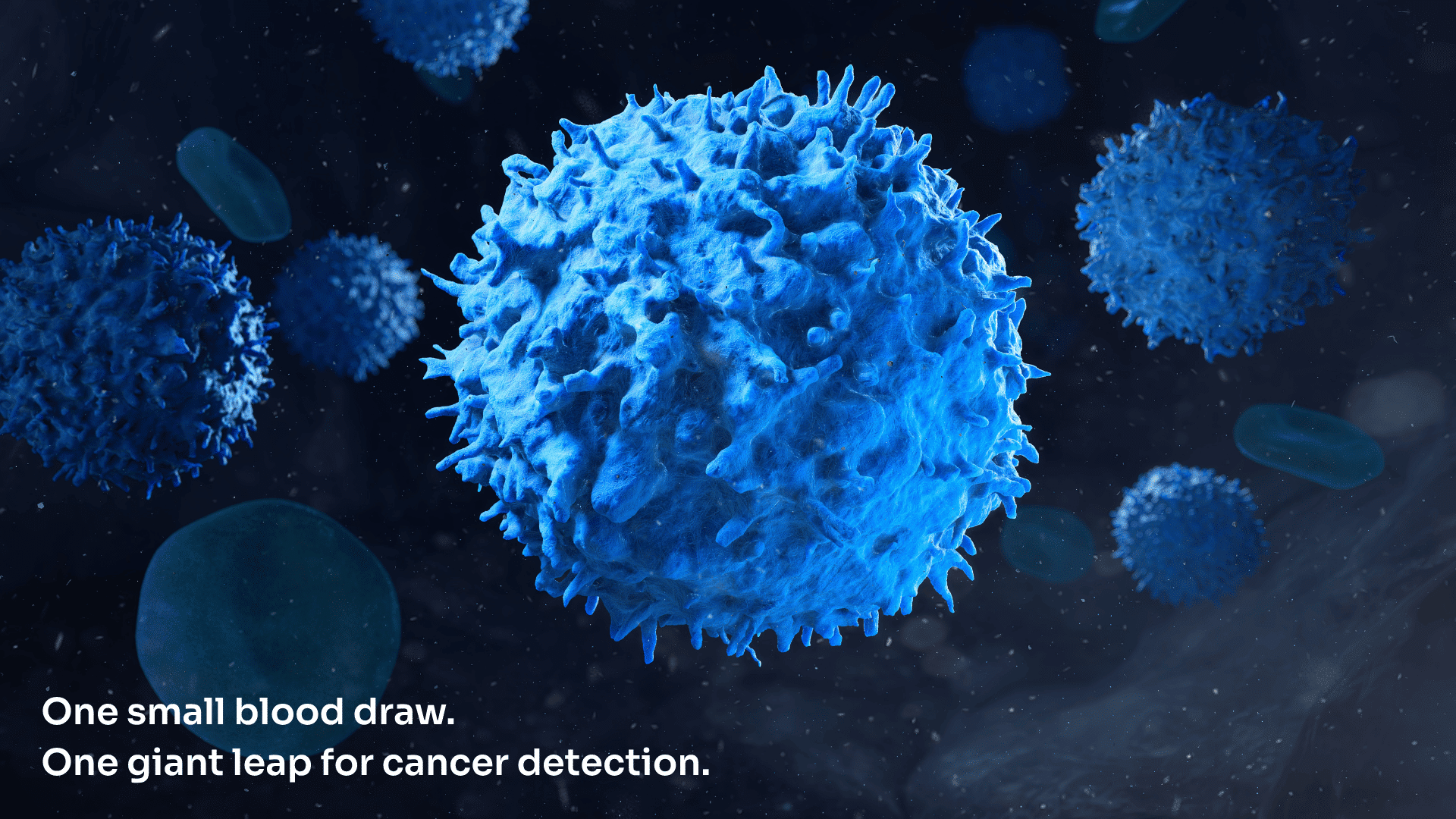
Every senior dog walking into an Australian clinic today carries a one in four chance of a cancer diagnosis somewhere in its future.1 Ask vets what makes them suspect cancer, and the answer is almost always the same: clinical signs.2 The sad news is that by the time a lump is found or a dog is unwell, the disease has potentially had months, sometimes years, to establish itself. Consequently in many cases, patients are not diagnosed until the later stages, when clinical signs are already present. Unfortunately, this delay can lead to poorer outcomes and shorter survival rates.3
For lymphoma, mast cell tumour and haemangiosarcoma, the 3 cancers Australian vets report that they see most often,3 that pattern has been especially hard to break. Specialist oncologists are few and stretched thin across the country, so it is general practice that carries the weight of most cancer diagnoses and the decisions that follow. The real barrier has never been whether vets can recognise cancer once it is obvious, it is whether they can catch it earlier and act with confidence; before the disease has progressed. That is the gap IDEXX Cancer DxTM was built to close.
Using proprietary technology to detect circulating biomarkers specific to canine lymphoma, a single blood test can flag disease in at-risk dogs up to 8 months before clinical signs appear.4 That head start changes the moment, from a diagnosis that lands as a shock, panic and emotion, to a conversation had in advance: what signs to watch for, what treatment could look like, and how early action gives a dog a real shot at a better outcome. Rather than waiting for a lump, or other clinical signs, a routine wellness visit becomes the moment cancer is caught, while there is still time to plan.
At as little as $29* with a qualifying profile, with B/T-cell phenotype included at no extra cost where available, it’s easy to add Cancer Dx to regular wellness screening for at-risk dogs† using the same blood sample.
If a simple, affordable blood test that fits into your existing workflow and helps you detect lymphoma early isn’t exciting enough, lean in, because the best is yet to come. In early 2027, the Cancer Dx panel will expand to include early detection capabilities for mast cell tumour and haemangiosarcoma – covering 40% of canine cancer cases.5
IDEXX’s commitment to innovation for veterinary oncology doesn’t stop there. The IDEXX inVue Dx™ Cellular Analyser will soon expand its capabilities to aid in slide-free FNA diagnosis of mast cell tumours at the point of care – together the IDEXX Cancer Dx test and the inVue Dx Cellular analyser will provide you with additional options for the diagnosis of mast cell tumour in your clinic.

Learn more about IDEXX Cancer Dx
idexx.com.au/cancerdx
*Correct at the time of publishing as at September 2026. IDEXX reserves the right to change prices at any time.
†At-risk dogs include all dogs ≥7 years old and high-risk breeds ≥4 years old.
References
What are the most common types of cancers in dogs? How many dogs typically get cancer? Veterinary Cancer Society; 2021. Accessed December 15, 2025. vetcancersociety.org/pet-owners/faqs
Rassnick KM, Bailey DB, Malone EK, et al. Comparison between L-CHOP and an L-CHOP protocol with interposed treatments of CCNU and MOPP (L-CHOP-CCNU-MOPP) for lymphoma in dogs. Vet Comp Oncol. 2010;8(4):243–253. doi:10.1111/j.1476-5829.2010.00224.x
IDEXX Enterprise Cancer Research – Australia. Quantitative survey of 150 general practice veterinarians; fieldwork November 2024. Data on file at IDEXX Laboratories, Inc.
Data on file at IDEXX Laboratories, Inc. Westbrook, Maine USA: Data based on testing performed at IDEXX Reference Laboratories in North America between November 1, 2024, and December 6, 2024. Analysis Report: IDEXX Cancer Dx Validation, 100282 [008_CancerDx-Validation-Report-2.Rmd].
Estimates based on analysis of publicly available incidence data and peer-reviewed literature