It has been a busy and important period for the AVA Victorian Division, with advocacy and collaboration firmly at the centre of our work.
We recently held the first of what we intend to become regular meetings between the AVA Victorian Division, Victoria’s Chief Veterinary Officer and the President of the Veterinary Practitioners Registration Board of Victoria. The inclusion of the Veterinary Board in this forum is a welcome and valuable addition.
Although our organisations have different responsibilities, we share a commitment in supporting veterinarians to practice professionally and protecting animal health and welfare. Bringing together the profession’s membership body, regulator and senior government veterinary leadership creates a stronger mechanism for sharing information, identifying emerging issues and coordinating our respective efforts. Most importantly, it reflects a genuine willingness to work collaboratively on behalf of Victoria’s veterinary profession and the communities it serves.
Advocating for veterinarians at Parliament House
This week, representatives of the Division were present at Victorian Parliament House and met with parliamentarians and representatives from their offices across the political spectrum.
Please see some photos below:
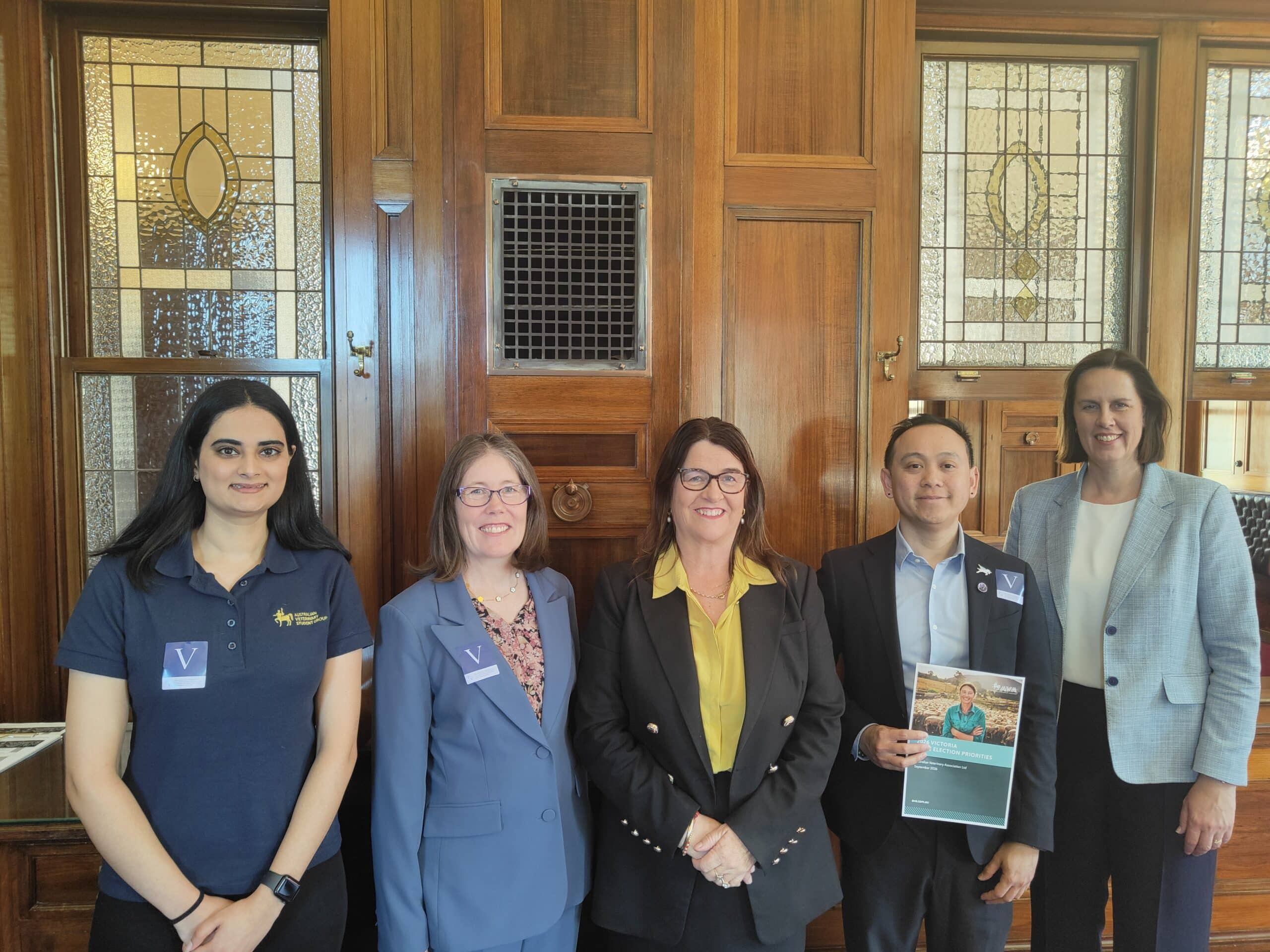
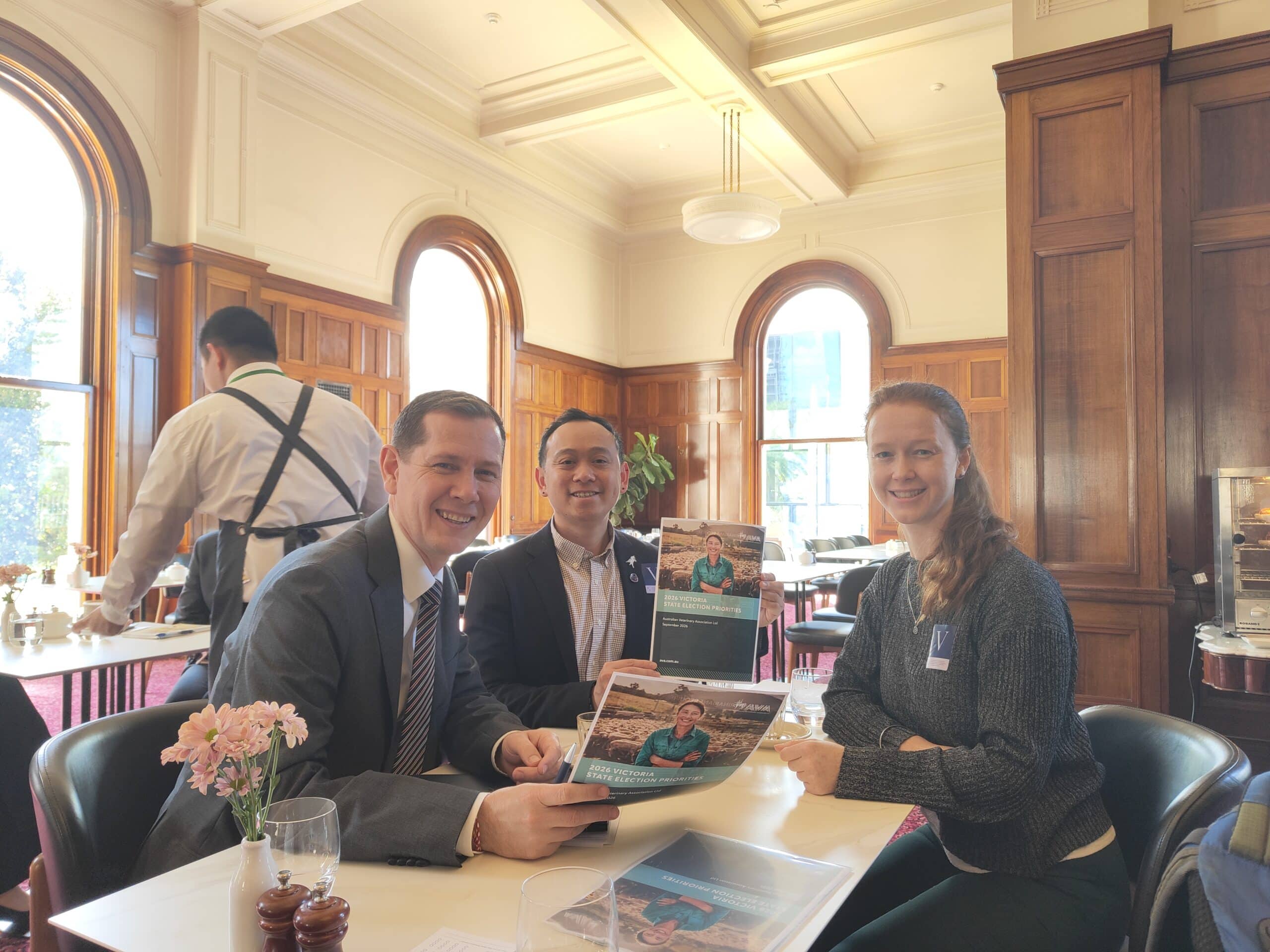
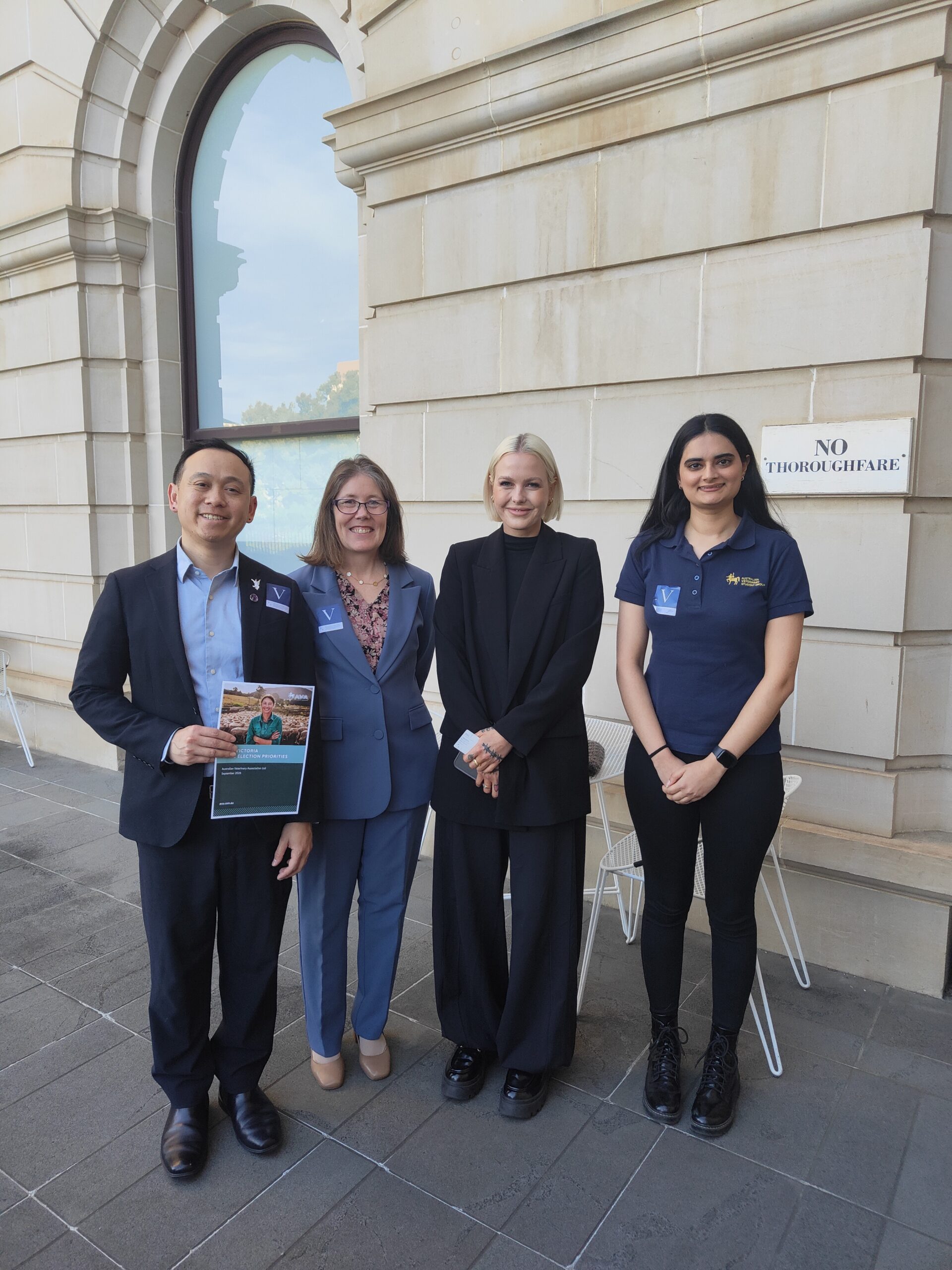
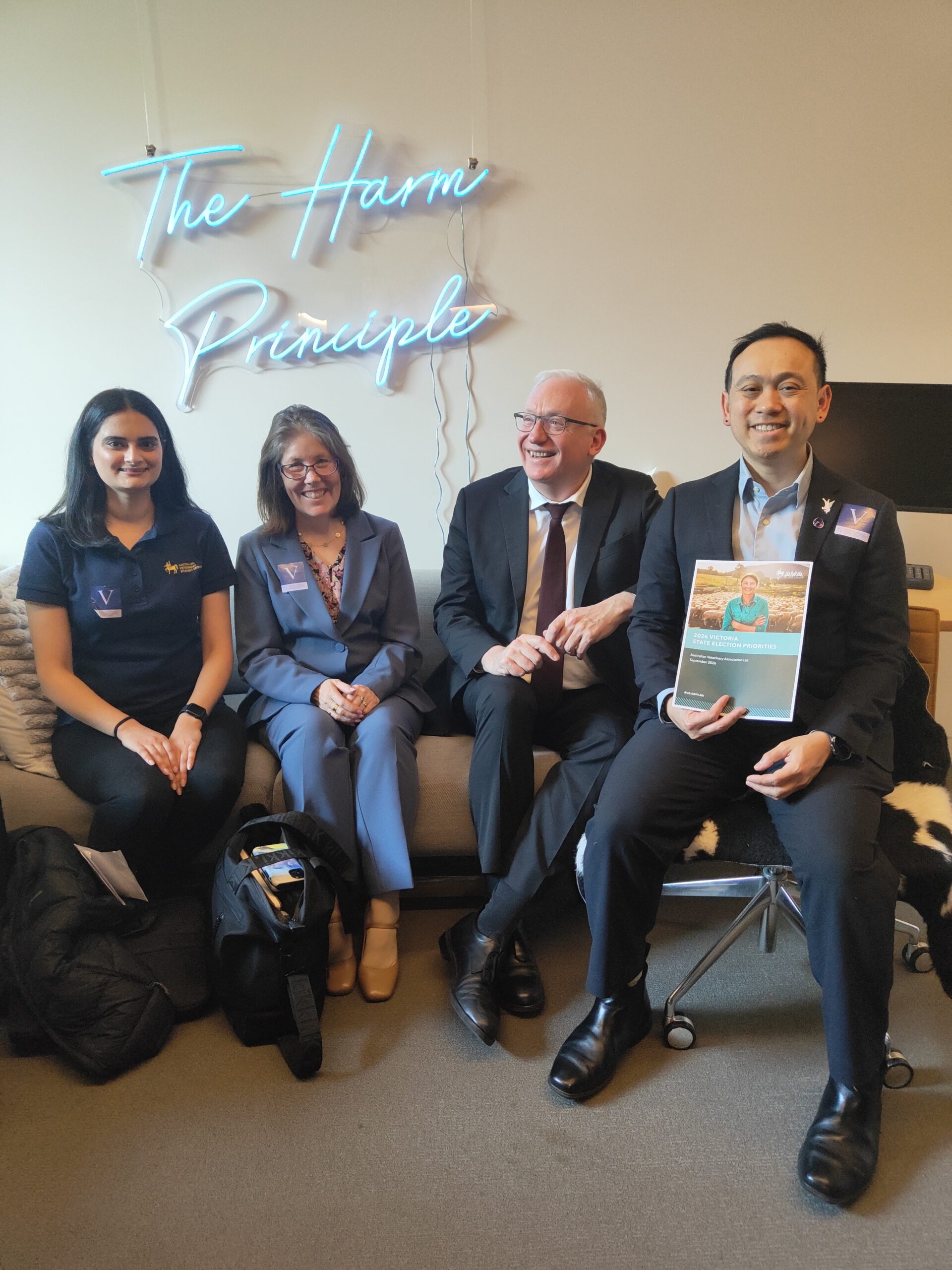
With the Victorian election approaching, these conversations provided an important opportunity to present the AVA’s election priorities and communicate directly with decision-makers about the pressures facing our profession and the practical changes needed to support veterinarians, veterinary teams, animal owners and the wider community.
Our advocacy focused on five priorities:
- strengthening Victoria’s veterinary workforce and supporting veterinary students;
- investing in the mental health and wellbeing of veterinary professionals;
- modernising veterinary regulation and legislation;
- improving funding equity for veterinary services delivered in the public interest; and
- strengthening Victoria’s animal health, welfare and emergency-response systems.
Among our specific requests was the establishment of scholarships to support veterinary students undertaking regional and rural placements. Veterinary degrees require extensive practical training, but the travel and accommodation costs associated with these placements can create a substantial financial burden. We also reinforced the need for veterinary students to be included in the Commonwealth placement-payment schemes and for broader measures that make regional veterinary careers sustainable.
We advocated for investment in veterinary mental-health and wellbeing initiatives, including psychologically safe workplace programs, mentoring and access to 24-hour counselling.
Regulatory reform was another important part of our advocacy. We called for modernised veterinary legislation and regulation supported by adequate resourcing for the Veterinary Practitioners Registration Board of Victoria. The AVA also sought that the Victorian government meaningfully consult with the profession regarding the proposal to consolidate the Veterinary Practitioners Registration Board of Victoria, following recommendations from the Silver Review.
The AVA advocated for veterinarians to be provided with access to PPE to help manage H5 bird flu infiltrating Victoria. We also advocated for fairer recognition and funding of veterinary services delivered in the public interest, stronger animal health and welfare systems, and improved arrangements for veterinary participation in emergency and disaster responses.
These meetings enabled us to strengthen relationships and ensure that veterinary priorities are heard across the political spectrum. They were an important step in an ongoing advocacy program, and the Division will continue engaging constructively with parliamentarians and their offices as the Victorian election approaches and when the new parliament is established.
Preparing for avian influenza
Avian influenza preparedness was also a significant focus of our recent discussions with the Chief Veterinary Officer and the Veterinary Board. Veterinarians are critical to the biosecurity response for avian influenza.
Response planning encompasses the potential effects of avian influenza on commercial and backyard poultry, wildlife, and companion animals.
We also discussed preparedness for the possible effects on Victoria’s wildlife, including its iconic little penguins and seal colonies. While vaccination may play a role in protecting some accessible animals (such as the little penguins), most wild populations cannot be readily handled or vaccinated. Preparedness must therefore extend beyond vaccination. It requires coordinated surveillance, clear reporting pathways, appropriate use of personal protective equipment, and practical arrangements for responding to and disposing of wildlife carcasses.
Veterinarians have an important role in explaining the science and placing risk in context. The risks of transmission to veterinarians and the broader population remain very low, but appropriate precautions must still be taken when avian influenza is suspected. Members of the public should not handle potentially affected birds and should report concerns through the designated government hotline.
Please report clusters of 5 or more sick or dead wild birds of any species, anywhere in Victoria. Report even one sick or dead:
- wild seabird, waterbird, shorebird or bird of prey
- marine mammal (e.g. seal, dolphin).
Report sick or dead wildlife online
To report sick or dead poultry or livestock please call the Emergency Animal Disease Hotline immediately on 1800 675 888.
There has also been understandable concern about possible infection of dogs and cats. The practical advice remains that pets should not be allowed to eat or chew dead birds or other wildlife, understanding that the risk to these animals is very low. Veterinarians are well placed to provide clear, proportionate advice without either minimising the need for precautions or causing unnecessary alarm.
The AVA has developed resources including a toolkit to support the response, with Agriculture Victoria also developing guidance and educational materials to support the response. This includes details on the veterinary clinic subsidy to support the cost and time for sampling suspect bird and other susceptible animals.
The AVA will continue working with the Chief Veterinary Officer, the Veterinary Board and other stakeholders to ensure that veterinarians receive clear and timely information. We will also continue advocating for the resources, protective equipment and coordinated systems required for veterinarians and veterinary teams to contribute safely to Victoria’s animal-disease response.
Continuing the conversation
These recent meetings demonstrate the value of the AVA’s relationships across government, Parliament and the veterinary profession. The AVA, the Veterinary Board and the Office of the Chief Veterinary Officer each have distinct roles, but there is much to be gained from working together, sharing information and identifying areas in which our efforts can complement one another.
Our visit to Parliament was not an endpoint. We now need to maintain those relationships and continue presenting a strong, evidence-informed case for investment in Victoria’s veterinary workforce, mental health, animal health and welfare systems.
Thank you to the members who continue to contribute their experiences, insights and expertise to this work. Your input helps ensure our advocacy reflect the realities facing veterinarians and veterinary teams across Victoria.
I look forward to keeping members informed as this work progresses.
Dr Suff Suharju BVSc (Hons)
President
AVA Victorian Division