While urinary cases are not always our bread-and-butter, they consistently make for interesting cases and demand a pro-active approach, particularly when presenting on the Friday night of a public holiday weekend.
Hydration Matters
The primary nutritional goal in cats with urinary conditions is to increase urine volume and dilution. Reducing the concentration of ‘promoters’ (mineral precursors involved in crystal and stone formation) and more frequent voiding, minimises the time that irritants (mineral precipitate, by-products of an inflamed epithelium etc) remain in contact with the bladder wall.
Cats are particularly vulnerable to dehydration, largely proposed on account of their desert-dwelling ancestry. Their relatively low thirst drive and ability to produce highly concentrated urine means they have a unique relationship with water turn-over.
Increased water intake results in increased urine volume, lower urine specific gravity (USG), and reduced urinary relative supersaturation (RSS), a key predictor of crystal formation.
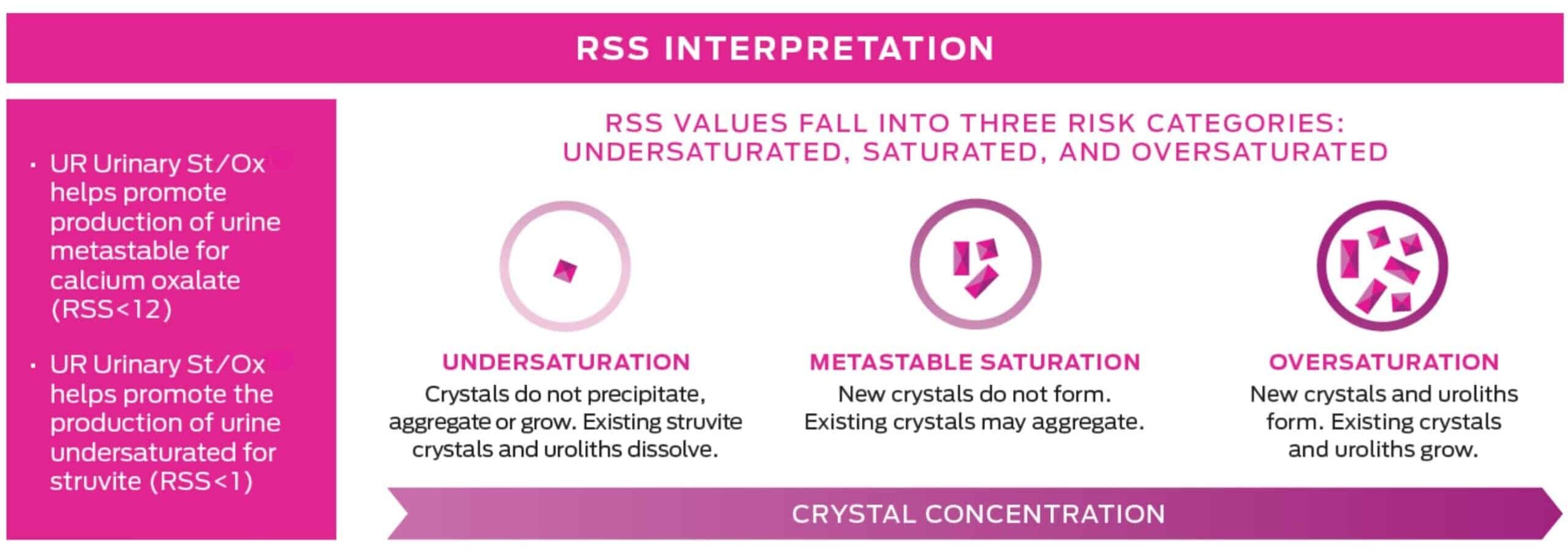
Relative Supersaturation: a ratio that calculates the potential of crystals to form in a solution.
Urinary Diets
Today’s urinary diets are formulated to nutritionally manage feline urolithiasis through several complementary mechanisms:
- Promoting urine dilution through increased water turnover
- Influencing mineral concentrations associated with crystal formation
- Producing a urinary pH less favourable to struvite stone development
- Reducing urinary relative supersaturation (RSS) for both struvite and calcium oxalate crystallisation
This cumulative approach to nutritional management of companion animal urinary conditions is a more recent and progressive approach than the singular pH-focused philosophy practiced in the 1980’s. Hence, cats consuming RSS-based urinary formulations produce urine with characteristics associated with reduced risk of both struvite and calcium oxalate crystallisation.
For practitioners, this means UR Urinary™ can be considered a cornerstone diet for cats with struvite urolithiasis, recurrent crystalluria and feline idiopathic cystitis (FIC) where urine dilution is desirable. They work as an acute management tool and for cats at risk of FLUTD recurrence.
Hydration Supplements
Nutrient-enriched water supplements have been developed to increase voluntary fluid consumption. Studies demonstrate that healthy cats offered this osmolyte-enriched product increased their weekly mean free liquid intake by approximately 40-118% above baseline throughout a 56d study. The test group of nine cats, fed in a ‘third bowl’ scenario, produced significantly greater urine volumes and lower USG compared with cats drinking tap water alone. (Zanghi BM et.al, 2018)
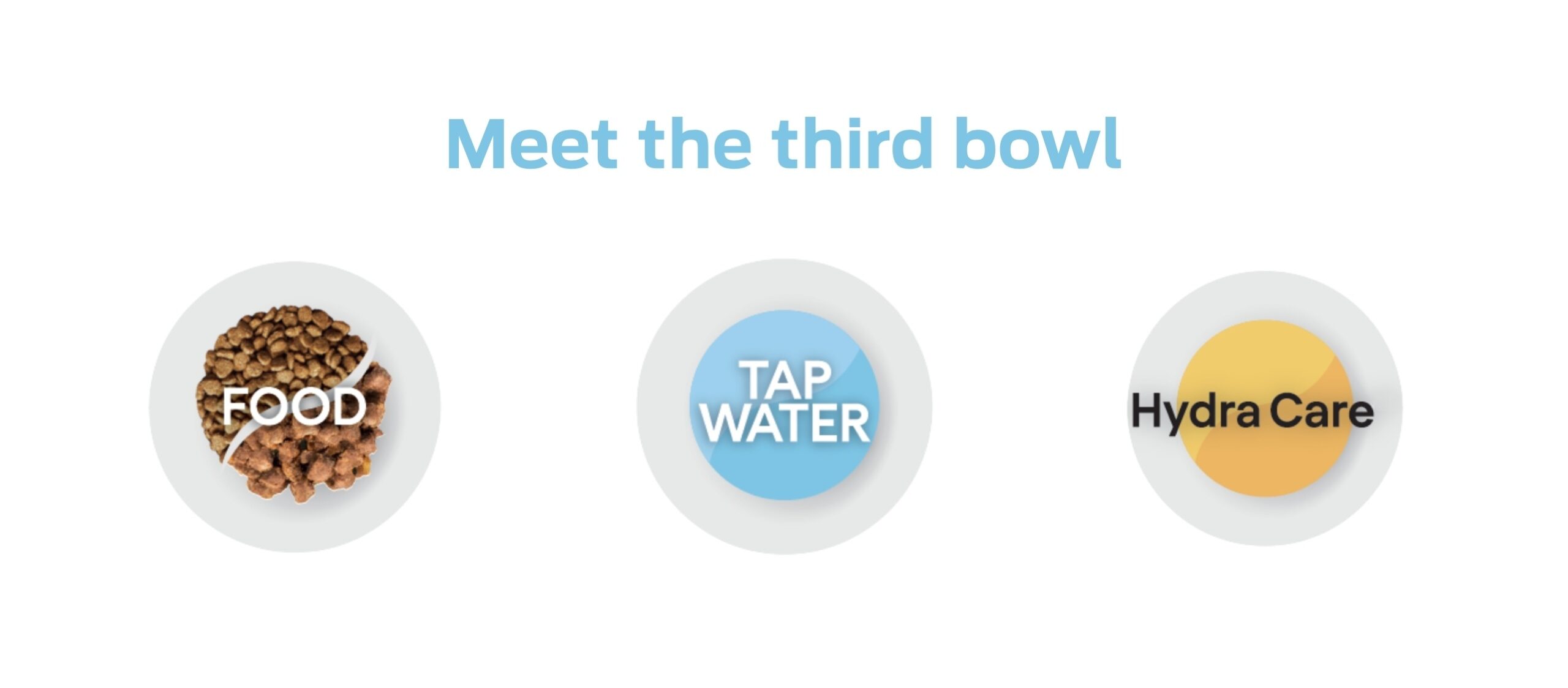
Nutrient-enriched third bowl feeding: note the supplement doesn’t replace food or water.
These and other supporting findings make Hydra Care™ useful for cats who benefit from additional water intakes, increased urinary volumes and reduced solute concentration. Beyond this and as a hydration aid, any patients facing a water deficit or reduced thirst drive stand to benefit. Those consuming dry diets only, in recovery or simply showing a preference for the product’s palatable jelly-like consistency and taste are good candidates too.
Practical clinical application
Nutritional intervention remains one of our most powerful tools to tackle urinary conditions. The evidence demonstrating diet’s influence over urine composition, volume and wider urinary tract health is clear, and conscientious use of wet and dry foods alongside supplements is now a mainstay of small animal practice. Purina Pro Plan Veterinary Diets UR Urinary™ and Hydra Care™ products are an effective and palatable core offering for acute and often ongoing nutritional management of feline lower urinary tract patients.
References
Available on request: lee.danks@au.nestle.com